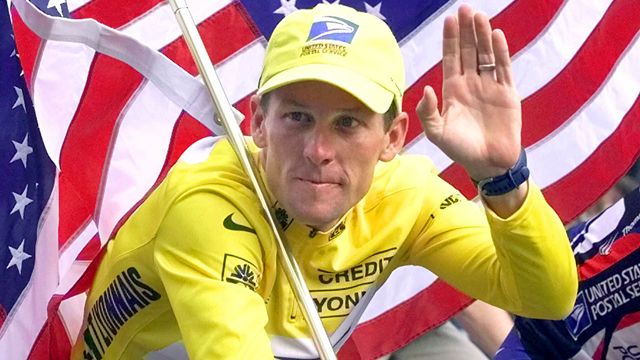
He made mistakes– big, grave mistakes. Many people were hurt severely, and plenty of legal business remains. Now after part two of his Oprah interview, I do believe Lance Armstrong is sorry. I also continue to believe this cocky, arrogant survivor deserves to earn gradual forgiveness over time, based on his actions from here forward to repair some of the damage within his capabilities. His first steps have begun.
It’s certainly no surprise that far more bad than good has been said about the now-banned professional cyclist in the past 24 hours. Various talking heads– myself excluded– seem to be taking the easy road by belittling his interview, writing off his explanations as somehow not good enough. But then, how could they ever be?
 Lance has an ego no doubt, and he’s holding onto it wherever he can. This is to be expected. Then when it comes to his children, the ego falls and emotion takes charge. Once again, Lance is human. Nevertheless, his interview is neither surreal nor jaw-dropping, and unlike Oprah, I was not mesmerized. He’s doing what he can today, forced into it as he might be, mindful of the deep hole he dug for himself– and I am listening. Still, it appears nothing he says– no way of phrasing it or spelling it out– will ever be good enough for his critics and his enemies. He remains in a no-win situation of his own making.
Lance knows this is a tough time, though understandably not the most difficult he’s lived through next to his advanced cancer diagnosis. He knows many if not most people will never believe him now– that it’s too late– that he’s made his own bed. Would he like to compete again? Of course he would! I could have answered that before he did. Will he? It’s unlikely at this point, though we’ll see what transpires.
Remorse will prove itself and forgiveness will be earned– so at least I can hope. Mistakes were made, lies were perpetuated, lives were greatly affected– and today, the past is just that. Like it or not, the doped-up, lying, seven-time Tour de France champion-turned-disgrace has now– at last– taken his first steps on his new road to some form of redemption. From here, we– like he– must only look ahead.
Tags: forgiveness for Lance, Is Lance sorry?, Lance Armstrong Oprah interview, Lance competing again, Lance interview part two, Lance's critics
He did not invent the culture, but he also did not try to stop the culture. This among many truths speaks volumes in part one of Oprah’s much-anticipated– if not overly pre-discussed– interview of Lance Armstrong.
There’s much to say about the disgraced cyclist, and no doubt much is already being said in the wake of tonight’s airing– all which I’ve yet to read upon this writing. For now, I take away this: Lance is a man, a human being, and as he readily admits, deeply flawed. At this late point there are no surprises, no shocking revelations, and no reasons for continued outrage. What happened– in terms of his doping, the series of lies that followed, and those affected throughout– is known to all. Is the whole story now not growing old?

Lance speaks to Oprah quite humbly and with apparent honesty. The most polished speaker he is not, nor expected to be. Nevertheless, for the “jerk” and the “bully” he owns up to having been, here he seems as real as he may allow himself to be. No matter the potentially unsavory details of what brought him to this interview chair, he maintains relative clarity, free of defensiveness and– to his credit– admitting his mistakes while repeatedly refraining from any finger-pointing.
“Winning at all costs” served him well at the time, a common though detrimental human mindset which holds at least some degree of understanding apart from the disapproval placed on it. What’s more important today is Lance’s lucid hindsight, as he now recognizes the wrongs that did not appear to him then. Defiant? Check. Arrogant? Check. And, still an able leader and an admirable humanitarian? Check.
As with most if not all public figures, from actors to politicians to elite athletes, one does not view himself from the same perspective as does the public. Lance reminds us now of this reality. As we best carefully consider the judgment we place upon him, he seems to be doing a decent job of judging himself. At the same time he’s prepared for the rest of his life to be apologizing and earning back what trust he can, Lance has declared he is happier today than he was while taking his yellow jerseys. He appears to grasp the reality of where he’s come, despite yesterday, and regardless of all that might await. This seems most important.
He once saw a level playing field, and now the playing field has been leveled. Lance’s past actions are clearly disappointing, but I do not dislike him– a double negative that indicates my cautious regard for him. I say this now, mindful of all that I– and you– still do not know, and might never know. But then, do we really need to? Lance is finally coming clean in his way, the sport of cycling is evolving as it deems necessary, and the past is just that. Again, he is human, complete with the same disappointing behavior set that has defined so many throughout history. The rest simply needs to be, shall we say– laid to rest.
I hope and predict that Lance Armstrong will rise again in some unusual and perhaps unforeseen capacity. For this simultaneously unique yet not-so-unique figure, there must surely be life “after Oprah.” But first, part two!
Tags: doping in cycling, future for Lance Armstrong, Lance Armstrong, Lance Armstrong and Oprah, Lance comes clean, Lance's interview
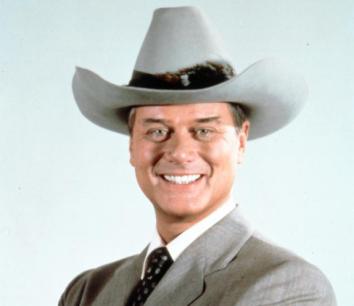
There’s a big difference between involvement and commitment, and J.R. Ewing once spelled it out. “Like ham and eggs. The chicken who laid the egg is involved, but the pig the ham came from is committed.”
And now, the eldest Ewing brother has died. I learned this late last night. Upon awaking this morning, unlike for Pam with Bobby, I realized to my dismay that what has just occurred is not a dream.
How fitting that Larry Hagman passed yesterday not only in the city of Dallas, but during a time of reprising his legendary character so many people know and even more of us love. In the final year of his life he had the rare yet celebrated privilege of resurrecting his iconic TV role, that which secured his unmatched place in the world while leaving diehard fans yearning for more of their favorite mischievous-yet-endearing schemer.
In 2012 he was back. Now in the same year he’s left us. This ironic timing seems the most comforting and appropriate way for him to make his long-in-coming exit. Hagman died on Friday, November 23, much to our collective sadness, taking with him of course the one and only J.R. Ewing.
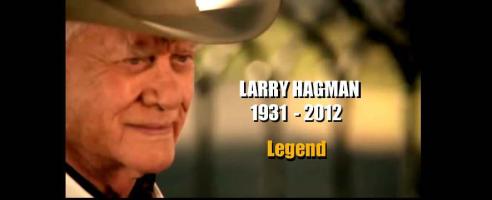
When he lived to see his 80th birthday in September 2011, I was delighted. In fact I breathed a sigh of congratulatory relief, mindful that his serious health challenges over the years rendered this milestone quite a feat. Then when the new “Dallas” finally premiered last summer, seeing Larry Hagman as J.R. Ewing once again after so many years was no less than amazing. Who’d have predicted that a longtime smoker and hard drinker a few breaths from death upon his 1995 liver transplant would live to reprise his infamous role in 2012?
Of course Larry Hagman had aged, almost sadly so. While his tongue continued to lash out those fantastic “J.R.-isms” in this year’s “Dallas” episodes, his body clearly was not keeping pace with his revered wit. Though trying not to admit it, I had a sneaking suspicion he was not long for this world. Like all his fans, I was thankful he had made it this far and managed not just the involvement, but commitment, to give it another go.

And one more round– the now-certain last round– is yet to come. Again, Larry Hagman died in Dallas while bringing J.R. back to season two of the new “Dallas” series. Exactly how prepared for his death the writers and producers of the show were– and just how smoothly and acceptably J.R. will make his final exit— remains to be seen once the series returns in January. Perhaps an appropriate contingency plan was already in place. Maybe J.R.– and Larry– thought ahead to this inevitable moment. After all, while I’m far from the only fan to mourn his death, I certainly can’t be the only one unsurprised.
No doubt he will be missed terribly while remembered wonderfully. Personally, I will always cherish my good fortune of meeting Mr. Hagman professionally in 2003. No other individual figure holds a candle to him, decorated bon vivant that he was, realistically and fictitiously speaking. Likely no one ever will.
More than involved, Hagman remained committed to his work, his role and his unsurpassed persona, leaving us a timeless gift under his mantra, “Vita Celebratio Est.” For this we celebrate one great life. After all, like J.R.’s daddy used to say: “Where there’s a way, there’s a will.” Larry Hagman found and mastered both.
Tags: "Where there's a way there's a will", Dallas in 2012, Dallas TNT, Dallas without J.R., J.R. Ewing, J.R. Ewing death, Larry Hagman, Larry Hagman death, Vita Celebratio Est
 While Lance Armstrong has now been stripped of his Tour de France victories, there will be no replacement winners for those seven years. The matter has been summed up clearly via the U.S. Anti-Doping Agency:
“USADA also thinks the Tour titles should not be given to other riders who finished on the podium, such was the level of doping during Armstrong’s era. The agency said 20 of the 21 riders on the podium in the Tour from 1999 through 2005 have been ‘directly tied to likely doping through admissions, sanctions, public investigations’ or other means. It added that of the 45 riders on the podium between 1996 and 2010, 36 were by cyclists ‘similarly tainted by doping.'” (AP/FoxNews.com)
An article out of Australia continues to voice my own thought process on this matter:
“Drug use… has been a significant part of the sport from its earliest days. A long list of some of the biggest stars and heroes of cycling have tested positive or admitted to drug use over the years. Drugs are as much a part of the Tour de France history as the bicycles themselves.” (BrisbaneTimes.com.au)
Not that I’m in any way condoning the use of performance-enhancing substances and methods in cycling, or in any sport for that matter. However, I’m reminded of a non-unique item of cycling history I recently read, of the very first Tour de France competitors in 1903 washing down snorts of cocaine with wine before hitting the road. This of course was just the beginning of such related actions for decades to come.
Lance is clearly not unusual in terms of doping. The only difference between him and so many of his brethren is that he managed to win the race a more-than-unusual seven times. Had he finished second, third or even further down the list in those years, I ask: Would this be happening now, after all this time?
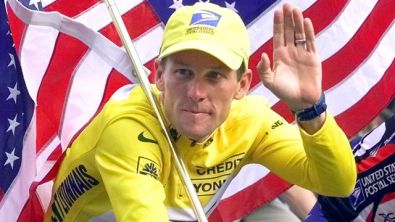
There is no winner now for those tours, because to find one free of doping would be a daunting if not impossible endeavor. I’m not exactly thrilled to be part of a sport with such a blemished reputation, and cycling should continue all present policies to rid itself of such actions while ushering in a cleaner and fairer era of competition. The fact of the matter is, however, that cycling was far from rid of doping during Lance’s reign. Shall we comb through the past 100 years and strip some more titles, or could we let history be exactly that?
The only difference is: He’s cycling’s biggest name, or was. He’s the man, or was. He’s Lance, and still is. While I’m disappointed in that of which he stands accused, I’m sorry for what’s now happened to him, in the harsh and sweeping manner it has. Lance Armstrong might no longer hold his place in cycling, but much to the disagreement of the International Cycling Union, he certainly does not deserve to be forgotten.
History cannot be rewritten. The only difference is: That was then, and this is now.
Tags: doping in cycling, Lance Armstrong, Lance Armstrong stripped of titles, no Tour de France winners, Tour de France doping history
On this eve of former President Jimmy Carter’s 88th birthday, a bit of perhaps overlooked presidential trivia is in order. Earlier this month, on September 6 to be exact, Carter broke the record for living the longest post-presidential life. This is not to be confused with the U.S. president who lived the longest life, but rather he who has lived the most time since leaving office. Until this September, the record was held by our 31st president, Herbert Hoover, who left office in 1933 and died in 1964. Now turning another year older but whether living or not, President Carter will hold this quiet distinction for at least the next 20 years!
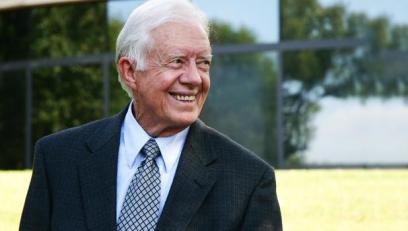
Former President Jimmy Carter turns 88 on October 1, 2012.
Tags: President Carter post-presidential life record, President Carter turns 88, President Jimmy Carter
Image

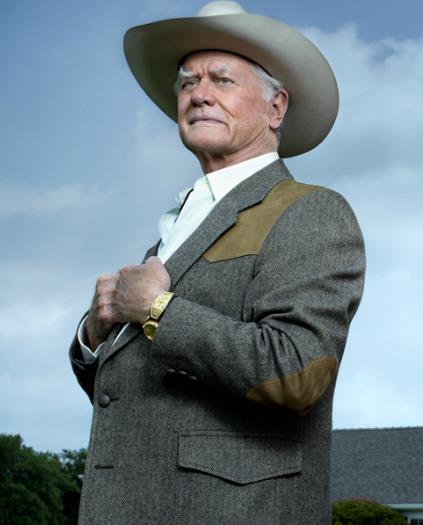
Larry Hagman turns 81 years old today.
 I know. I miss him too. And what a wonderful trip back in time it was, almost as if we were watching one of his State of the Union addresses, seeing him once again in his element where he always shines at his best. Love him or less-than-love him, align yourself with his party or not, agree with his policies and principles or beg to differ, you’ll be hard-pressed to argue this tried and simple fact: There’s only one Bill Clinton.
His charisma, magnetism and power of persuasion– woven with his undisputable intellect— remain unmatched. He speaks, and continues to speak, for a relatively long stretch of time. But we know this. It’s Bill, after all. His presentation last night at the Democratic National Convention was no deviation from his expected and accepted style and use of time. President Clinton was back– if but for one night, for now at least— stronger, more commanding and even funnier than ever. Only he, the master orator, can do what he does the way he does it, even better after 20 years. This is precisely what you have to love– if not love– about #42.
Tags: Bill Clinton convention speech, Bill Clinton DNC speech, Bill Clinton power of persuasion, President Clinton's speech
Not everyone can be a “life-of-the-party type” as she once described herself, nor will anyone ever be quite like her. Still, may those she inspired keep her fabulous wit, wisecracks and energy alive and strong. For an impressive life 95 years long, Phyllis Diller lived hers more than well. She will forever remain a true original.

Tags: Phyllis Diller, Phyllis Diller death, Phyllis Diller true original
The focus… is on a younger generation, and the stories of the younger Ewings aren’t as captivating initially as catching up with J.R. and Bobby.” (Porter, zap2it.com)
It’s like The CW has moved into Southfork, and while they look good, they haven’t quite mastered what it means to be Ewings.” (Yeoman, screenrant.com)
“The new Dallas isn’t perfect – it certainly takes a little while to find its feet and not everything clicks straight away.” (Jeffrey, digitalspy.com)
“We could easily have before us any cheesy, unrealistic, poorly acted show made up of yet another generic collection of attractive-yet-dull, scheming-yet-scattered 30-something amateurs.” (yours truly)

My sentiments seem to fit right in among various others. As a lifelong follower of all-things-Ewing, I’ve both anticipated and questioned the premiere of this new TNT series for quite some time. And naturally I have a few things to say about it thus far, now three episodes in with episode four airing tonight.
I’ll of course be watching, and waiting– that is, waiting to see how my initial impressions develop and my overall outlook evolves. Answers to my questions would be helpful, but then non-answers keep us tuned in, right?
Watch the new “Dallas” for yourself and form your own opinion, either before or after reading my first review.
Tags: Bobby Ewing in 2012, Dallas 2012 review, Dallas TNT, J.R. Ewing in 2012, Sue Ellen in 2012
In light of one refreshingly frank rhetorical question from President Lyndon Johnson almost 50 years ago, President Obama might very well be asking himself the same thing today. Considering Mr. Obama’s now-clarified support of same-sex marriage, it seems a very solid question on which to base his announcement.
In addition to the expected widespread liberal praise, agreement with the president’s viewpoint is coming even from conservative sources. Former Bush Solicitor General Ted Olson, who more than two years ago wrote the conservative case for gay marriage, wasted no time yesterday in reminding us Mr. Obama has it right. In fact, Mr. Olson goes on to articulate precisely the argument that too often seems to be forgotten:
“How many citizens would have voted to continue separate-but-equal schools, if you’d put that to a vote in 1954? In fact, in 1967, there were 14 states that prohibited interracial marriages, indeed made interracial marriages a felony, and the Supreme Court struck down those laws unanimously in 1967.” (Avlon, DB 5/9/12)
It’s been said before and will be said again: Civil rights, for any group at any time, need not be put to a popular vote. Why gay marriage continues to be left to “the will of the people” certainly baffles many of us. Nevertheless, President Obama has now placed himself in the position of initiating some real and permanent change on this matter, while perhaps drawing on the experience of LBJ. After all, the question that rang true in 1963 should certainly carry its weight in most any circumstance.
Regardless of what comes next, at least Mr. Obama is no longer “evolving.” And in spite of all the tension, argument and debate, we always need a good chuckle!

Tags: "What the hell's the presidency for?", gay marriage support, LBJ civil rights, Obama gay marriage, Ted Olson gay marriage, Texts from Hillary
Were you “outraged” by any comments, jokes or insults floating around in the media universe yesterday? I most certainly hope you were not. If however you were, then you missed the “National Day of No Outrage,” brought to us by comedian Bill Maher via his op-ed last week.
“Let’s have an amnesty– from the left and the right– on every made-up, fake, totally insincere, playacted hurt, insult, slight and affront. Let’s make this Sunday the National Day of No Outrage. One day a year when you will not find some tiny thing someone did or said and pretend you can barely continue functioning until they apologize.” (Bill Maher, The New York Times, March 21, 2012)
Thank you, Mr. Maher. I could not agree with you more, except to take the practice a step or two further by instituting the same kind of national week, then even a national month, and so on and so forth until all “outrage” has been purged from everyone’s bodies! Then maybe– just maybe– personalities can freely say what they will, offend a few viewers or listeners along the way– which is par for the course– and wake up to see another day without a big chunk of everyone’s time wasted on yet another silly, forced apology. After all, with another nod to Maher’s reasoning, who wants to live in a society where nothing ever offends anyone? How utterly boring! And remember, there’s a big difference between being “offended” and being “outraged.” Think about this.
Until this time comes, at least we have Maher’s second piece of solid, sound and refreshingly simple advice to practice daily while learning to coexist:
“If you see or hear something you don’t like in the media, just go on with your life. Turn the page or flip the dial or pick up your roll of quarters and leave the booth.”
And that’s our coexisting opinion!
Tags: Bill Maher, Bill Maher no apologies, National Day of No Outrage, no outrage Bill Maher, stop apologizing!
At this point it’s all about the math. In the wake of Super Tuesday, the race for the Republican presidential nomination appears to be leaning all the more in favor of the largely presumed winner.
“Super Tuesday dramatically reduced the likelihood that any of Governor Romney’s opponents can obtain the Republican nomination. As Governor Romney’s opponents attempt to ignore the basic principles of math, the only person’s odds of winning they are increasing are President Obama’s.” (Rich Beeson)

In other words, it’s time for even the most conservative Republicans to put logic ahead of emotion, if this is at all possible. From my own selectively objective, somewhat journalistic, ideally non-partisan viewpoint, I echo the common sentiment that Republicans of all degrees need to rally around Mitt Romney for even the slightest chance of winning the White House come November.
This is where the math comes in. Romney holds a majority of delegates so far allocated, and from what I heard on a talk radio program today, Santorum would have to win two-thirds of all remaining delegates to clinch the nomination, a basically insurmountable task. Gingrich and Paul, meanwhile, barely deserve a mention at this point. And for anyone who didn’t already know this: Rick Santorum is just plain unelectable by our general population. Nominating him, however unlikely, would simply hand President Obama his reelection.
As such, one question for the GOP to answer in the next several weeks is this: Will logic back up the math?
And this is really not just my opinion, if my opinion at all.
Tags: Mitt Romney, Rick Santorum, Romney the nominee, Super Tuesday
All the current hubbub over conservative radio personality Rush Limbaugh and his inflammatory words concerns me, not so much over what he said about Georgetown law student Sandra Fluke– which was indeed a stretch– but more so for the resulting behavior of his critics, the media and even the public at large.
Granted, Rush was out there on one of his typical audience-feeding rants, being his usual shocking, outlandish, offensive self, while perhaps using a less-than-accurate choice of words to describe Fluke. After all, maybe her sex life is monogamous, and who’s to know if she charges? Rush knew not what he was saying, as if this particular instance were unusual.
But guess what: That’s Rush. He’s a “media entertainer” of his own brand, catering to his distinct and loyal audience, shocking, outlandish, offensive– and in this case inappropriate– as he may be. None of these traits is illegal. I’ve listened to his program on occasion, and while a time or two I’ve grabbed onto a thread of his logic with which to agree, more often than not I’ve found him to be, for lack of a better term, crazy, his train heading straight for derailment. Not once, however, have I wished to see him stricken from the airwaves, nor in any way edited or silenced. If I tire of him, or find his topic du jour too unpalatable, I’ll change the station. Rush is who he is, and he has every right to be so, apology or not. What concerns me is how so many people believe otherwise. Why is this?
Enter Kirsten Powers. She just might be onto something with her take on the situation, as I find her talk of a partisan-based double standard worthy of some serious contemplation by all.
While all this is going on, I learned while in Los Angeles last week that the often-insensitive though widely popular “John & Ken” had been suspended from the air for speaking callously— if not accurately God forbid– of the late Whitney Houston. A situation unrelated to that of Rush, it stands in the same camp, that of punishing often-intentionally offensive media personalities for speaking their unedited minds. John & Ken, like Rush, enjoy a dedicated following of fans unlikely to be offended by anything they have to say. The irony here– and with Rush– is that all the uproar, protest, boycotts and calls for their heads come from those who wouldn’t want to listen to them anyway! Still, Rush pays the price, just as John & Ken do.
My concern remains. Silencing voices deemed too inappropriate, while calling for the type of “civil discourse” that some might say turns us into milquetoasts, not only undercuts media diversity, broadcast entertainment, range of thought and free speech, but more than all this furthers that slippery slope of punishing anything “offensive” or outside of the so-called mainstream. Insensitive speech, in whatever crude though legal form it might present itself, should not be shunned, but rather welcomed and used to further that much-desired discourse. If not this, then perhaps it can just be laughed at, shrugged off, and not taken so damn seriously!
Isn’t freedom of expression, offensive or not, what this country is all about?
Tags: John & Ken suspended, John& Ken on Whitney Houston, Kirsten Powers, media double standard, Rush Limbaugh, Rush Limbaugh apology, Rush Limbaugh Sandra Fluke
She never sat down with Barbara Walters and spilled her guts. There was no public airing of her dirty laundry. To her great credit, she maintained dignity and privacy throughout her life, granting no interviews. As such, never did she create the typical high-profile media event akin to so many others– one that’s scheduled, promoted, sensationalized, over-analyzed and ultimately replayed time and again. She simply did not share herself with us in the way we might have expected and enjoyed.
The closest she ever came– and the most we’ll ever get– exists in the form of her audio recordings of 1964, made public for the first time just this past fall, as I then enthusiastically reported. Just months after the indelible event of November 22, 1963 that changed her life, the country and the world, the recently widowed Jacqueline Kennedy spoke on tape with historian Arthur M. Schlesinger Jr., providing a rare yet quite extensive glimpse into her feelings, outlooks and recollections of not only her time in the White House– among everyone and everything that came with it– but also of the rigorous path to getting there, along with the seemingly countless figures by whom she was constantly surrounded.

I’m pleased to say I’ve now had the pleasure of hearing this insightful audio collection in its entirety, and not a moment too soon. Five months ago my words were based solely on the small pieces of these recordings that the media reported. As with most material of particular interest, however, it’s far better to listen, learn and judge for ourselves. This I’ve done, leaving me satisfied, informed and rewarded.
Much ground is covered, with numerous names, dates and places to recall and keep track of while listening to Mrs. Kennedy speak. Fortunately the book which accompanies the CD recordings presents her words verbatim, while within the pages annotates the individual or circumstance being discussed. This makes for a series of fascinating and thorough history lessons.
Granted, some topics of conversation prove more interesting than others. This is a never-before-heard Jackie, wonderfully raw and unedited. With this come her often-fragmented thoughts, her mid-sentence changes of course, and her occasional long-windedness. Still, it’s precisely these elements that make these recordings so compelling. After all, at no other time have we heard her in this manner. Unlike her 1962 White House Tour, or her 1964 thank you to the nation, we’re treated to the real Jacqueline Kennedy, free of script, rehearsal or cue.
For anyone who appreciates the many varied players and events of the Kennedy administration– and of course admires Jackie herself– this audio collection is not to be passed up. My copy will remain with me for years to come, and maybe even find its way into my lending library!
And that’s my… oh, need I bother?
Tags: Arthur M. Schlesinger Jr., Jackie Kennedy audio tapes, Jackie's 1964 audio tapes, Jacqueline Kennedy Onassis, Jacqueline Kennedy unedited
Like him or not, Donald Trump always commands media attention. And agree with him or not, the media does listen to what he has to say. The question is: Will the public?
Trump’s endorsement of Republican candidate Mitt Romney for president might not make a big difference in the long run. We’ll see. Given his options however, I say Trump made the best choice.
If nothing else, The Donald once again captured the media’s attention today, as well as mine, and– probably even yours too. Don’t worry, you can admit it!
Tags: Donald Trump, Trump and the media, Trump endorses Romney
As the definition states: “In practice, the term Goldwater Republican is used by people today unsatisfied with the Republican Party’s current focus on social issues and family matters.”
Then come articles such as this one in today’s New York Times, which underscore overall Republican lack of cohesion and agreement well into the current election cycle.

Senator Barry Goldwater, 1962
What the Republican party really seems it could use in this presidential election year is a Goldwater resurrection. Just as Barack Obama four years ago became the fresh new face of the Democratic party, it’s well past time for the GOP to present its own similar face of freshness, one that appeals not to the party’s extreme religious fringes, but rather to its much larger, more moderate and consensus-building center. At the same time, a much more daunting and insurmountable question beckons: How can the religious right be divorced from the Republican party, yielding a GOP much like that of 50+ years ago?
After all, “The increasing influence of the Christian right on the Republican Party so conflicted with Goldwater’s libertarian views that he became a vocal opponent of the religious right on issues such as abortion, gay rights and the role of religion in public life.” (Wikipedia)
An online posting in 2008 titled “The Future of the Right” clearly and succinctly defines three basic types of Republicans. For all the concern four years ago over the focus and the future of the Republican party, this feeling has by no means subsided, but rather grown. As written in 2010, Goldwater would not recognize today’s party, while being “seriously taken aback with the anti-gay and anti-choice views.” Then, one-time possible Republican presidential candidate Donald Trump, just yesterday, expressed his own thoughts on the distinct possibility of Republican self-destruction, keeping this ongoing concern very much alive into 2012.
The bottom line is this: The Republican party can do better, to-be-determined strategy notwithstanding. “Republican” itself is not a dirty word; rather it’s been hijacked and smeared by the figures and forces of the current time. A Goldwater resurrection stands a decent chance of changing this course, if only such a movement could take root, gain visibility, and build viable strength in numbers.
So where are the Goldwater Republicans? They’re not in the mainstream media it seems, nor in the current presidential election. It’s time to find them. This is step one.
Tags: 2012 Republican presidential nomination, Barry Goldwater, Goldwater Republicans, Goldwater resurrection
Common sense continues to be disturbingly lacking, I write with a sigh. While I’ve never been a particular fan or follower of U.S. Senator Rand Paul, in this case I do strongly agree with him, I write with a smile.
The Kentucky Republican senator’s interview with CNN’s Wolf Blitzer following yesterday’s so-called debacle sums it up very clearly, and I’m right with him. Senator Paul should have been able to immediately pass through the scanner a second time, which would have most quickly resolved the situation– and ironically WAS the ultimate outcome– but unfortunately the needed common sense was not already in place for this to happen.
It’s not just about one little isolated incident, and this is not a case of a public figure seeking special privileges. The fact of the matter is: The TSA continues to prove itself an inefficient, unpredictable, anger-inducing and often non-sensical bureaucracy that’s very much in need of policy rethinking and revision. Senator Paul’s “debacle” this week simply shines yet another light on this delicately tolerated reality, not to mention my own recent eye-rolling experiences and observations.
While change is typically inevitable, it often needs a little push, if not several big pushes. May Senator Paul’s now-highly publicized incident serve as a good push, in addition to the hundreds of complaints per week the TSA reportedly receives. The senator’s father, Republican presidential candidate Ron Paul, is already “pushing” himself, but this is another story in itself. In any case, nothing will change overnight, but something will certainly change over time.
And that’s my opinion.
Tags: Rand Paul, Rand Paul TSA, Ron Paul TSA, TSA common sense, TSA policies
We knew she’d make it! Not only is she very much here to celebrate this remarkable occasion, but it’s quite obvious she’s smoothly sailing right past her momentous milestone with plenty of energy for life ahead.
And of course we knew there would be a big party, televised for all of us to enjoy, a modern-day version of her classic Dean Martin dinner roast. She undoubtedly deserves this honor, while her fans– including myself– love her for all she’s become as the most “golden girl” of all, the reigning senior queen of comedy.
May any of us who live to see this day for ourselves be as sexy, good-humored and sharp-witted as she. January 17 is the very day for us to say, as she sails on into yet another new decade:
Happy 90th Birthday, Betty White!

Tags: Betty White, Betty White 90th birthday, Betty White birthday party
“More recently the trend has been greater longevity. From Herbert Hoover through Reagan, excluding John F. Kennedy, who was assassinated, seven of the eight presidents lived longer than expected, including Franklin D. Roosevelt, who died at 63 but served for 12 years. Their average age at inauguration was 58.9 years and average expected age of death, assuming presidents aged twice as fast while in office, was 68.9 years. The average actual age at death was 81.6 years. The exception was Lyndon B. Johnson who died of heart disease at 64.” (NYT, 12/6/11)
‘Tis indeed a remarkable truth, with thanks to The New York Times today for speaking the numerical language with which many of us presidential historians are quite familiar. After all, with Presidents Jimmy Carter and George H.W. Bush both currently living at age 87, after seeing Presidents Ford and Reagan survive to 93– with the presidential longevity record going to Ford– it’s definitely safe to say the job itself does not kill the occupant, at least not by natural causes. LBJ remains the closest exception, expiring a health-plagued four years after leaving office, almost to the day. Nixon, for the additional unmatched stress he endured, lived on almost 20 years past his presidency and at least made it past age 80. Bill Clinton and George W. Bush of course define the “younger generation” of former presidents, while both now 65 have a while to catch up to their predecessors.
This phenomenon of recent presidential longevity clearly extends to spouses. After all, with the exception of Jacqueline Kennedy Onassis who died at 64, first ladies of the past half-century have lived into their 80s if not 90s– save that “younger generation” of Hillary Clinton and Laura Bush who have yet to get there of course.
Suffice to say, this sort of numerology always makes for interesting conversation, especially going back more than 50 years. Historical trivia it is after all, of the presidential ages.
Tags: ages of ex-presidents, ages of first ladies, presidential aging, presidents and aging
Certain questions will forever remain unanswered. No time-leaping cinematic journey through the complex life of one of America’s most powerful yet complicated figures of history will ever put all the pieces together. We’re left to wonder, as perhaps well we should for the sake of ongoing argument and analysis. While this latest depiction surely rests incomplete in its overall life coverage– most do after all– the retelling of such infamous though calculatedly unproven historical details has made its way onto the big screen in a film very well worth your time and consideration. Simply put, go see J. Edgar.
Some unrealistic makeup notwithstanding, Leonardo DiCaprio pulls off a solidly believable portrayal of the enigmatic bulldog who for almost a half-century ran the department that grew to become during his reign the Federal Bureau of Investigation. While Director Clint Eastwood necessarily ignores many significant years and events, the history he does choose to cover maintains focus on the man of mystery who shaped and influenced– by means both good and not so good– federal law enforcement in this country.
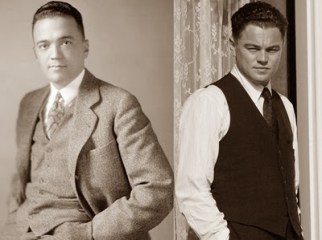
Reality and Portrayal
There is no other J. Edgar Hoover. We already knew this. Still, as with so many high-ranking government officials, the daily struggle ensues between the personal and the public man. In Hoover’s case this may very well have been more than the average struggle, as Eastwood’s film steadily examines, and which no doubt draws us to the ticket window. Perhaps even more than his personal files for blackmail comes the unresolved fascination with Hoover’s sexuality. While the film unambiguously delves into this subject, it does so with a surprising amount of respect and restraint. In other words, the recipe is light on sexual behavior, heavy on conflicted emotional intimacy, all intertwined with another day on the job. His relationships are strong yet difficult, with his mother, with his colleagues, and certainly with the man he “needed.” This we see and see well.
Critics will call J. Edgar a disappointment– and they have— but as usual I believe in coming to my own conclusion. So should you. From unconvincing cameo portrayals of RFK and Nixon, to poignant moments with Clyde Tolson, to telling scenes with Hoover’s mother and the loyal presence of “Miss Gandy” throughout, all peppered with historical tragedy and even some splashes of Hoover-style wit and humor, this film demands our attention from start to finish. In the end, we’re left with that sense of wonder. If only Miss Gandy hadn’t been so faithful as to destroy all those personal files, I say! But of course, she did. Thanks to her, we’ll never know. Thanks to Clint Eastwood, we know a little more.
Tags: Clint Eastwood, J Edgar film, J Edgar Hoover, J Edgar movie review
 “The one and only” indeed. Naturally I have to hand it to a man who’s made a lifelong career out of having opinions. While many manage to pull it off for a while in one form or another, this bold opinion giver is unarguably unique in his brand, carrying a raw style and distinct presentation that are simply unmatched.
As such, it’s a shame to see him go. Andy Rooney had the last word on CBS’ “60 Minutes” this past Sunday night, for his final regularly scheduled time. While the 92-year-old “curmudgeonly commentator” is not retiring, so he says, for the first time in more than 30 years he will not be ranting on a weekly basis. Among all else, he’ll be enjoying his restaurant dinners without your interruption, while NOT giving you his autograph. Still, as his mind continues to churn, Rooney’s last word last night may very well not be his last.
I admire the type of people there’s only one of, and there’s certainly only one Andy Rooney, the product of a nearly extinct generation we may not see again anytime soon. He has some very big shoes to fill. But then, will anyone dare try?
Tags: 60 Minutes, Andy Rooney, Andy Rooney 60 Minutes

A man of surprises.
Twice in one month! That is, two unexpected yet impressive quotes out of the often-unpredictable mouth of California Governor Jerry Brown.
A few weeks ago, upon vetoing a bill to require skiers under 18 to wear helmets, the third-term Democrat stated: “Not every human problem deserves a law.”
Then this week, in expediting the process for construction of a new stadium in Los Angeles despite legal and environmental challenges, Brown declared: “But there are too many damn regulations… Let’s cut the barriers and regulations and move ahead.”
It sounds to me like this historically big-government career politician is undergoing a left-to-center shift in his return to the job he held three decades ago. Perhaps this is precisely Brown’s strategy, appealing to a more centrist and even right-leaning audience in his now golden political years. Let’s just hope it’s not the old “bait-and-switch” routine, distracting us with attractive less-government rhetoric while seeking a way to circumvent Prop 13 and raise property taxes. Since thankfully he cannot do such a thing quickly or alone, I’ll keep my suspicion in check for now — if not my cynicism — and rest simply on his most recent and refreshing quotes.
Words like the above from Governor Jerry Brown capture my attention and earn my praise. To my own surprise, on this, I commend him. And I know I’m not alone, in either surprise or commendation.
Tags: Governor Brown quotes, Governor Brown regulations, Governor Jerry Brown
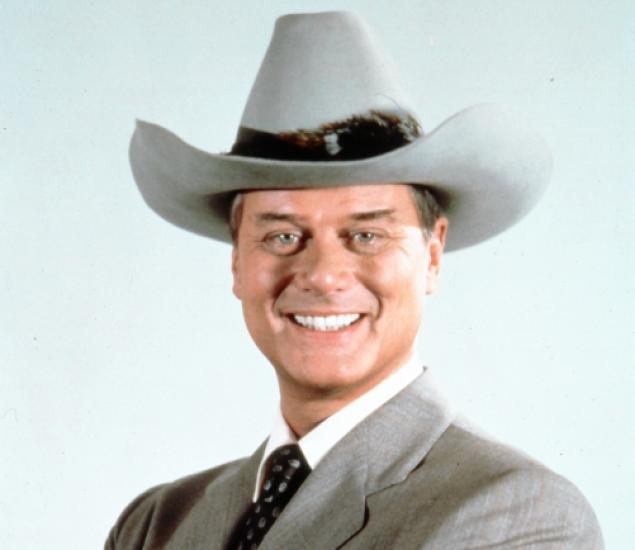
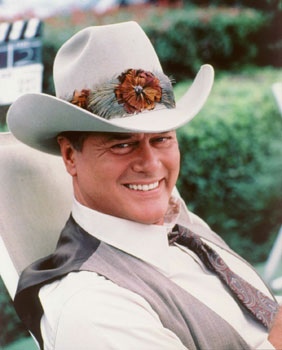
He made it! J.R. Ewing has hit his latest milestone, as Larry  Hagman today turns 80 years old.
Now 16 years since Hagman’s well-publicized liver transplant, and 31 years after his character Ewing’s world-famous (though of course fictitious) gunshot wounds, the TV icon enters his new decade in the midst of reprising his infamous role. That is, a new version of “Dallas” is coming our way in 2012, as Hagman celebrates a big day he once thought he’d never see. I’m certainly thrilled that he is indeed here for it.
The eldest Ewing brother lives, in more ways than one. Happy 80th J.R.!
Tags: J.R. Ewing, Larry Hagman, Larry Hagman 80th birthday, Larry Hagman turns 80









 Here’s to her impressive 60 years as monarch, though of course not






 Ryan R. Sanderson